
Humanity always has had a penetrating history, that goes back to millions of years. From Hobbits to Neanderthal, mysteries are waiting to be unraveled throughout the geography of the world. Not only these caves offer us an insight into our past but also reveal the stunning beauty of the art and culture of our ancestors. But it's not always beauty that they bring out, sometimes they can also bring horror and life-threatening possibilities. These are mysteries that are yet to be explained by our scientists. Some of them are the most perplexing discoveries that are made in the depth of the ancient most caves. Get yourself ready to dive deep into the world of mysteries and discoveries.
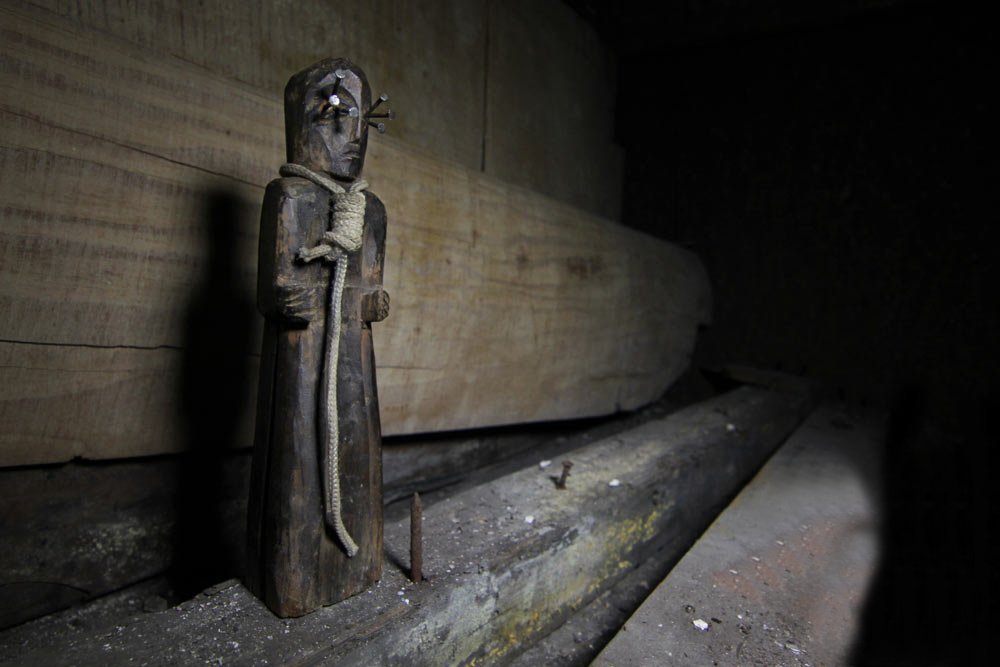 Deep inside a cave of the Catskill Mountains, hikers found an idol that most of us would be terrified to see. This black statue looks like some sort of doll whose eyes have been hammered with nails. The sight of this statue makes ones' knees go weak.
The source of the statue is not very evident but back then the hikers who found the statue started experiencing paranormal happenings around them; like the statue would change places on its own or induce a strange smell around the house. According to one of the hikers, he also started seeing scary beings around his house. The strange statue then made its way to The Traveling Museum of the Paranormal & Occult where it is kept under high surveillance and far from anyone to touch.
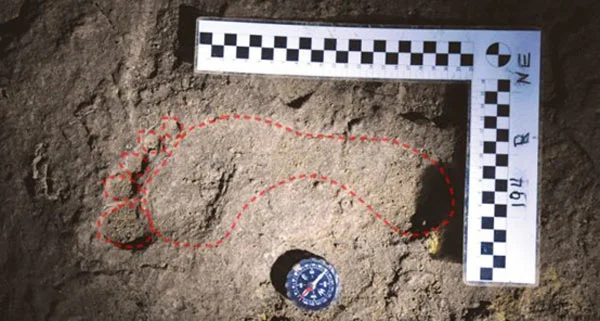 Ever heard of Transylvania? Apart from what you know for its count Dracula legends, the place is also home to one of the most ancient caves in the world. In one such place, the Ciur-Izbuc cave located in the Western Carpathians of Transylvania, Romania, was found to have more than 400 human foot-prints that are believed by scientists to be more than 36,000 years old. If this theory is true we might have opened gates towards new discoveries about the evolution of mankind.
Some of these prints have been erased by the effect of time and the rest might meet the same fate soon. So, if you want to have a look at one of the world's oldest footprint, you might want to book a trip to Transylvania. Rest assured, no more Dracula there.
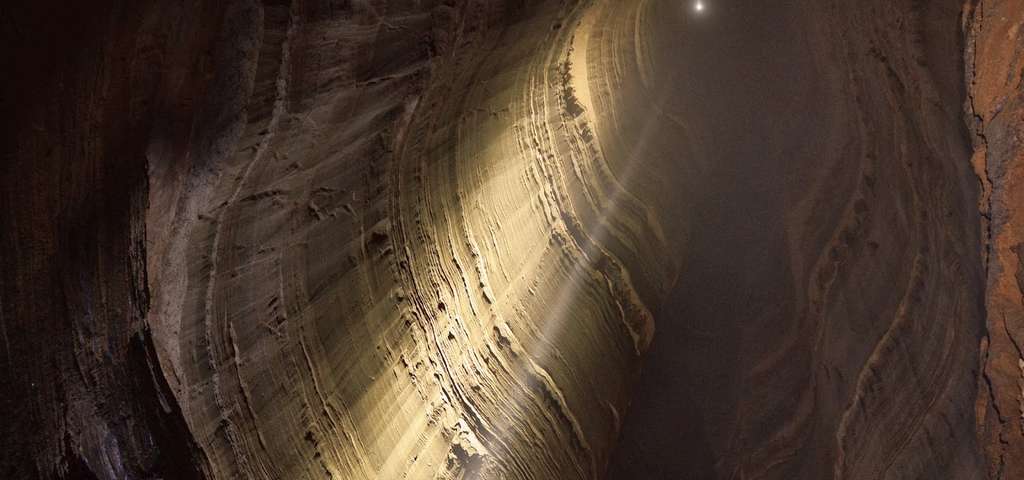
There's light at the end of the cave. Is there? When we talk about Ellison’s Cave in Northwest Georgia, this saying goes wrong. Archeologists have been in search of deep down topographies and when they found this one, they were nothing short of astonished. This pit is the 12th deepest cave in the world with a descent of 12 miles of dark and dangerous caves. It is so deep that it would submerge half of the 102-story Empire State Building.
With no light, without pieces of equipment, the fall is full of horrifying darkness the pictures of which might give you nightmares and reasons to never even think about visiting a place like that.
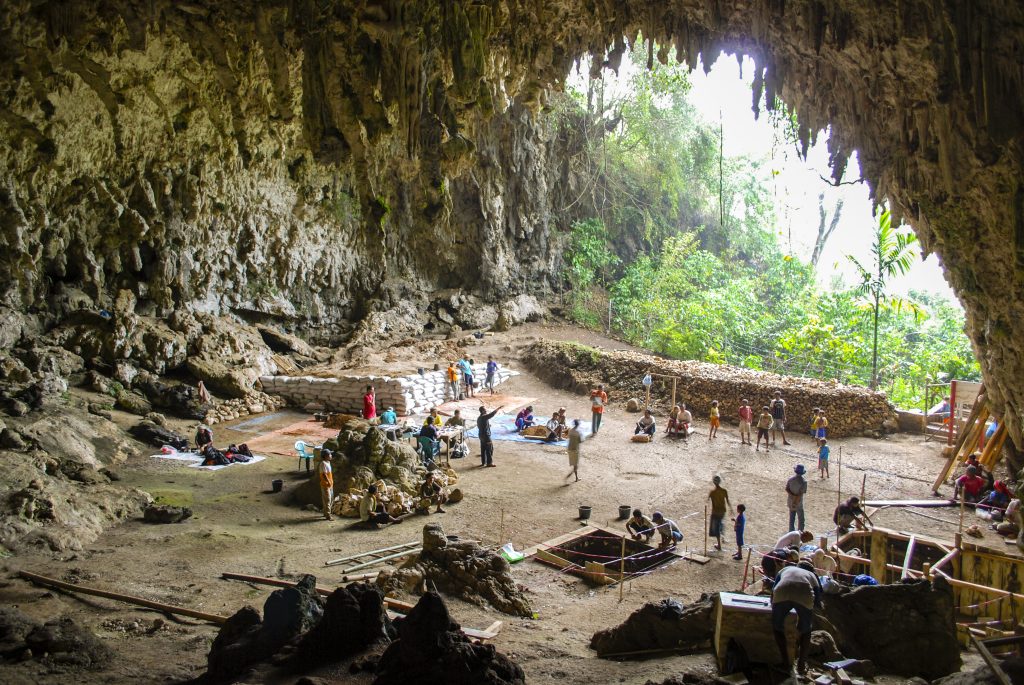 Everyone has read about Lemuel Gulliver who accidentally found an island with miniature human beings. This cave from Indonesia proves it might be a possibility that the species from the fictional tale actually existed.
Liang Bua is the cave where this new species of human beings, Homo floresiensis remains were found. They were roughly 3 feet tall and were initially thought to have existed around 12,000 years ago. But a recent study suggests that these hobbits might have gone extinct around 100,000 to 60,000 years ago.

Humans in the modern era have been known to appreciate art and culture. An evolved society like ours has learned that art and paintings can be a very interesting way to share our feelings. Only when we find a 13,000-year-old exemplary painting on the walls of a cave, are we astonished as to how people so ancient could so beautifully transform these walls into amazing paintings.
In this case what left our explorers astounded was a piece of painting on this Argentinian Cave, painted with dozens of handprints expressed in red chalk powder. We are forced to believe that we are not the first to believe in the power of art and heritage.

Not only are the things we find in caves amusingly beautiful, but sometimes the caves themselves turn out to be amazing also. The Karst Caves in China is one such cave that is irresistibly astonishing. This is because the walls reflect a color of blue and purple and how often do we find a cave with such beautiful walls.
The history of the walls suggests that it was created by some ancient river around 500,000 years ago. We've also come to know that this particular cave was used as a bomb shelter in WWII.
 Not always do we find a cave in the deserted lands and formidable mountain peaks or below the land, sometimes we find them deep beneath the treasures of the ocean. Several caves have been discovered under the sea and they carry even more secrets than the ones on land.
Numerous such chests of hidden treasures are in the Bahamas. It is the home to several underwater caves. They are beautiful to look at because of the different color than the rest of the water. This might be because their entrance traps more light and reflect a darker shade of blue.
 Snakes can be really creepy creatures and apart from some of us, everyone is afraid of their venomous nature. How big can a snake be? 10 feet, 20 feet, on records the largest snake since this incident was Medusa, a python and was 25 feet long. Think that's too much to be real? Wait until you hear this.
Found in Altamira, Para in Northern Brazil by construction workers, this monster snake beats the length of the defending champion by an astounding 10 feet. It was measured to be of 33 feet long. Now that is unbelievable. Hope you never plan to visit Altamira or you might just meet this friend on the roads.

Living Beings have been known to evolve according to their habitat. As their name goes, this species of fishes do not have the power of sight and live in the deepest underwater caves. So, how do they move, prey and survive? They might not have a sense of vision but have developed abilities to sense vibrations and pressure changes in the ocean water. The central nervous system then aids the fish to move and prey without even using its eyes.
 Sometimes our exploration ends up asking us several difficult questions. Underwater divers, in Madagascar, found bones of giant Lemurs. Now, these are extremely endangered species that live on the ground. The even more shocking fact that raises questions is that these bones were of creatures as big as Gorillas.
Now to answer the question as to how these bones reached so deep under the ocean, there is a theory that suggests that water current and waves pushed them here. These findings complete our knowledge of evolution but do we know it all? What more might be hidden in one of those deep caves, who knows!
 We have talked about caves, goosebumps and an intimidating sense of fear, but the Hellfire Caves don't only inject horror but a feeling of dismay and misfortune. This set of caves in the West Wycombe Caves of southeast England might be manmade but the idols carved justify the name given to the caves.
These carving apparently are of some devil and people believe that the place might have been used for occult practices.
 We have all heard of glowing creatures in the dark, which on one hand look mesmerizing and on the other use this phosphorescence to prey on small insects that get attracted to these minions. In the caves of Waitomo, New Zealand, there is an abundance of these worm-like creatures which dangle from the ceiling and wait for their next prey.
This cave has turned into a tourist destination where people come from across the globe to see these dangling orbs. All it takes is a ticket to New Zealand and a couple of hours of kayaking.
 Spiders can be really creepy and the most dangerous of them are known to be found in hot deserts, dense woods or in this case deep caves. This creature is found in dark caves of places like the Sierra Cacachila mountain ranges and is one of the most venomous species to be discovered.
By the looks of it, it remains one of the most creepy things you could see. Black, too large to be a spider and of course its venom. Every feature that it carries is well enough to freak any sane human out.
 There might be creepy and dangerous creatures like the Baja Spider or the world's longest snake lurking around in some deserted cave but sometimes we find certain things that attract us with their beauty and we wonder if we have seen all the magnificent things in the world. One such creature is the Olm Salamander found in the deep underwater caves of Slovenia and Croatia.
This little aquatic wonder uses electro-sensation to understand its underwater surroundings and just like the blind fish we discussed earlier, this too is visually impaired. Another thing that is wonderful about it is that it can live up to 100 years and unlike other aquatic creatures this one does not shed its original gills until its death.
 Now, these are places you should never plan on visiting. Apart from the Black Sea, Wolves and Vampires, one thing that Romania is famous for are caves that are too poisonous for humans to visit. These caves have been abandoned for more than 5.5 million years and all these years, life inside these caves have evolved in strange ways.
These unhospitable caves are a host to several breeds of poisonous spiders, snakes, and other reptiles. The cave was named as Movile Cave and also has a lake towards its end which smells of rotten eggs and burnt sulfur.

Going deeper into the cave can be both dangerous and difficult. To move further one needs to plunge deep into the darkness of the poisonous waters. The struggle does not end here, the further you move down, the lesser the amount of O2. And at a place already full of poisonous gases, lack of oxygen is the last thing you can dream of.
The human body can only survive for a couple of hours in these Romanian depths. The question that might strike your mind now is; Why go beyond your limits to explore a smelly, creepy cave?
The answer: The deeper we move inside, the greater the number of life forms and creatures that have adapted to these depths.
 Sunlight has never found its way down here so the inhabitants have adapted to an ecosystem that functions without the sunrays. Imagine how difficult it would for us down there? The bacterias in here, break down chemicals in the air to get their carbon dioxide and survive.
In these depths, it is impossible for human beings to survive but the explorations carry on and who knows what we might find buried deep in these caves.
 It is gluey and tacky and one would surely want to stay away. It is a layer of single-celled bacteria sticking to the ceiling hanging down waiting for the next flying insect to be trapped. This substance was first noticed in a cave in Tabasco, Mexico.
It is known to thrive in extreme environmental conditions, temperatures or atmosphere where people like you or me would certainly not exist.
 In a cave located in Naica, Mexico, scientists claim to have found life in the form of crystals. The group investigating the place was not under the impression that they could find something like this. The life they found is around 50,000 years old.
The bacterias found, survived in the cave by feasting on iron and magnesium that existed within these crystals. The introduction to this form of life had widened the scope of finding it under more circumstances.
 Now, what's surprising about that? We already know that bats live in caves and dark places. The disturbing fact about this particular cave in the Monfort Bat Sanctuary is the number of bats that thrive here. Though the cave is just 245 feet deep but right from the entrance there is a thick layer of black on the walls. A quivering sound keeps coming to haunt you and you find yourself surrounded by thousands of bats. No a fun place to be in, right?
 Neanderthals were primitives, now extinct species who lived around Eurasia until 40,000 years ago. Research suggests that they used the cave's stalactites and stalagmites for some of their strange rituals or gatherings. In this particular cave, 400 such structures were found. Though we are not yet sure of the purpose with which they built these, it has surely given us an insight into the ancient culture.
 Jewelry has been an important part of any civilization's culture and legacy. In a cave called the Cueva de Los Avinoes, scientists found jewelry made by Neanderthals. Apart from these, primitive art was also found on the walls of this cave. The jewelry is dated to be as old as 115,000 years. These arts and jewelry are one of the oldest to be ever found.
To explain that in a better way, this jewelry was created more than 20,000 years before the first modern human arrived in Europe.
 Evolution of living beings dates even before the history we have read in books. Every time we think we know enough, nature passes on a gift that we have never received. In this particular cave in Africa, the world's largest discovery of skeletal bone was done. The interesting fact was that these were the first of its kind to be ever discovered. This discovery led us to believe that we found a new species of human that existed something like 3 million years ago. The species was given the name Homo Naledi.

Some chapters from the past induce so much horror that they are better left unsaid. In this dark and despicable cave somewhere in Spain, scientists have found that Neanderthal practiced cannibalism somewhere around 10,000 years ago. The bones that have been found in the cave were dented, crushed and broken in ways that suggest cannibalism. Scientists also believe that cannibalism by this tribe was not carried out for nutrients but as an intimidating act for other competing tribes.
Research also suggests that Neanderthal had small social-network, that is why they failed to co-operate with each other and ended up eating each other at hard times.
 Apart from dangling Snottites, caves with passing time can also create some beautiful masterpieces. Gruta de las Canicas or the Cave of the Marbles is located in Tabasco, Mexico is known for widely producing these beautiful marbles. In an excavation through this cave, more than 200 million such pearls were found. These beautiful spherical shapes are created mostly out of calcite or might contain quartz, aluminum or even calcium.
In Carlsbad Caverns, New Mexico, there was a time when they handed visitors with a pearl as souvenirs just because there were a lot of them.
 Considered as one of the most beautiful caves across the world, this is a place that is neither spooky nor dangerous. This is the one cave you would love to visit on your next trip to Greece. Melissani cave has an entire lake inside it and is a pretty tourist destination.
The water in the cave is clear and people visiting the cave can explore it on a canoe or kayak.
 It's horrifying, just to hear the name of this cave, let alone visit it. This cave is a part of the larger Smoo Cave in Northern Scotland. The name 'Cave of the Dead' was given because the scientists and archeologists found proof of human sacrifices.
How petrifying were the rituals are proved by the bones that were found. Head on pikes, butchered bodies, bodies in pits; awful enough? Visiting this cave is quite difficult because of the uneven terrain and you might never want to visit even if it were easy.
 Stalactites are very common with caves. We can find them almost in every ancient cave but they take a lot of time to grow as they grow 0.13mm every year and that is why this Stalactites made it to this extraordinary list. This structure was found in Jeita Grotto in Lebanon and had grown to be about 27 feet.
Now you see, what's extraordinary. Just imagine for how long has this structure has been growing.
 Now Stalagmites might be considered as the twin of Stalactites but there is a difference as to how they are formed. Stalagmites are a type of rock formation formed by an accumulation of material deposits by minerals dripping off the ceiling and on the ground. They can be composed of lava, mud, minerals, sand and other sediments.
The tallest of the Stalagmites was discovered inside Doolin Cave in Claire, Ireland and is about 21 feet in height.
 Deep and deserted caves apart from hosting bacteria and ancient bones, sometimes house important and rare documents. A cave in the Judean Desert is believed to have hidden these scrolls for thousands of years. Though during this excavation no original scrolls were discovered other important artifacts were surely found. It is believed that the caves were looted long before the research team reached there in 2017.
In another excavation done previously, in the year 1947 a manuscript that had texts from 4th Century BC and 2nd Century AD was found.
 There are certain caves that scientists have visited but due to limited resources and technology, we have only been able to reach a certain depth. One such cave is The Krubera Cave in the Republic of Georgia.
The depth that we have been able to reach yet is 6,824 feet and we are still far above the core of this gigantic cave. To be able to navigate to a different depth altogether, archaeologists have set up camps in the way down so that navigators can replenish resources on their way down. Only time will tell if we will ever reach the bottom or even if the cave has an end!
 The journey down to the deepest caves is not as easy as they seem. Scientists have a hard time reaching down and carrying out their research. They work for hours through the day and sleep in tents inside those dangerous and uninhabitable trenches. The temperatures are extreme and oxygen-less surroundings make it difficult for them to survive. Every curve in the trench can lead to an unexpected end and that's why these expeditions, as they say, is not a cake walk.
 Did we tell you about the life forms found in millions of years old huge block of crystals? What we forgot was about the crystals themselves. These are huge blocks of crystals growing for a very long period of time. Some of them weigh around 55-ton and grow up to a height of 36 feet. That's quite big. These bulldozer crystals are found in the aptly named Cave of Crystals in Naica, Mexico.
Further, for a human to spend time in these caves is quite difficult as the temperature can rise up to 118 degrees Fahrenheit and humidity to 90 percent. An average human can only survive for around 30 minutes without proper equipment. Want to have a look at some crystals? I suggest finding a place more hospitable towards humans.
 This is no work of cosmetics on actors for sci-fi movies. When scientists found this in a cave they were also of the same opinion as you but research later revealed that this was a real claw of an ancient beast. This claw is of one of the most dangerous birds that have ever existed. Moa, a bird species from New Zealand might have gone extinct but the mere exploration of its claws open several doors towards more revelations about this breed.
Moa was bigger than any bird species currently existing. They even preyed on humans. Thank God, the beast is no more for us to see.
 We have been able to explore a number of caves and what we have found has left us imagining the possibilities of life across different spheres. The mystery though has yet not been completely unraveled. There is a hoard of caves that humanity has yet not reached to and we can only speculate the insane amount of secrets hidden within these walls.
Let's move forward with more such haunting or beautiful cave full of beautiful life forms.
 These are two really deep and huge caves. Now the story that leads them to this list of extraordinary cave explorations is that at a point they were connected. One opened to the other. Now that makes this set of caves potentially one of the deepest caves to be ever explored. And for the record, we've yet not reached its deepest point.
These caves are located in the Leoganger Steinberger area, in Salzburg, Austria and extend down to at least 5,354 feet deep. To explore deeper into them, scientists might need to use explosives but this option is yet being explored.
 We have seen caves with strange paintings and carvings before but this cave from England has taken mystification to a completely new level. Inside the Royston Cave, various mysterious carvings and paintings have been found, each of which has been testified with a different story. There have been speculations that inside this hides the secret of the Holy Grail.
Though none of the anecdotes have been confirmed this, scientists also believe that this cave might have been used as a prison or an anchorite cell.
 What is interesting about this Panxian Cave is that proof has told us that about 300,000 years ago, early man existed in these caves. But wait, that's not the only thing that is surprising. What is more daunting is that this cave is at an altitude of 1,630 meters above sea level.
Now the question that arises is how could gigantic animals like those whose remains have been discovered reach that altitude?
 Though these caves make it at the bottom of the list, yet these are one of the most talked about caves when it comes to hiding mysteries inside caves. These are the caves in Cornwall, England that date back to 500 BC but look like they have been well preserved.
The interesting thing about the cave is that people who have visited the cave said that they felt an odd light phenomenon or had extraordinary visions. Though our scientists have not found the reason for any such occurrence they feel that it might be because of the Earth's energy that was thought to exist by our ancestors who built these caves.
 Located in the outskirts of Austria, the Eisriesenwelt Cave is a strange place of ice. All channels in the cave are inter-linked and this makes it look like an underground ice world. The area on which the cave spans is another feature that boosted this cave to this list as it covers a remarkable area of 30 miles.
It is one of the most beautiful caves you would visit.